Marco Rubio’s Munich Putsch
Raising "Western Civilization" from the Ashes

These are indeed Hegelian times, and if you still don’t believe it, I urge you to read the full transcript of Marco Rubio’s speech delivered earlier today at the Munich Security Conference 2026.
Marco Rubio’s speech is saturated with a Hegelian vision of world history—and it behooves us to grapple with its multiple Hegelian dimensions. It calls on us to confront and once again invert, or turn on their head, or put back on their feet, the many Hegelian concepts that permeate Rubio’s historical fabulation.
Marco Rubio’s Munich Speech
In his speech, Rubio decries the “delusion” that the West achieved “the End of History” when the Soviet Union collapsed and the Cold War ended. He ridicules the supposed “rules-based global order” that people believed the West had entered—the idea that “every nation would now be a liberal democracy” or that “we would now live in a world without borders where everyone became a citizen of the world.” He condemns the cosmopolitanism that flourished at the turn of the twenty-first century.
Rubio argues that the idea of the “End of History” is a dangerous trope that has corroded the social fabric and weakened states in the West by promoting open borders and allowing a flood of non-European immigrants. “In a pursuit of a world without borders,” Rubio declares, “we opened our doors to an unprecedented wave of mass migration that threatens the cohesion of our societies, the continuity of our culture, and the future of our people.”
Rubio elaborates a sanitized American history that represents the progressive unfolding of Western civilization. He ties it exclusively to Christianity, European peoples, conquest, colonization, imperialism, and white supremacy. Rubio wipes out the very existence of indigenous peoples and of the enslaved peoples who were forcibly brought to the Americas. There is not a single mention of Native Americans or enslaved persons in Rubio’s history.
“We are part of one civilization, Western civilization,” Rubio declares, “forged by centuries of shared history, Christian faith, culture, heritage, language, ancestry, and the sacrifices our forefathers made together for the common civilization to which we have fallen heir.”
On the basis of this world historical vision, Rubio argues for a return to strong state sovereignty, national interests, closed and policed borders, and a European civilizational mission. He is arguing for a fundamental—one could say dialectical—shift from the neoliberal global order and cosmopolitan discourse of the 1990-2000s to its antithesis: a state sovereigntist, white nationalist, vitalist politics. One that safeguards national interests rather than operating “a global welfare state and aton[ing] for the purported sins of past generations.” One that will promise a “stronger,” “prouder,” and “wealthier nation for our children.”
The Hegelian Dimensions
It is important to emphasize that Rubio’s explicit reference to the “End of History” is not, in itself, the central Hegelian element of his speech. It does, of course, index a debate that is primarily associated with early twentieth-century interpretations of Hegel. The “End of History” trope traces back primarily to the Russian and French philosopher and bureaucrat Alexandre Kojève’s controversial reading of Hegel in the 1930s, made popular in the United States thanks to the conservative philosopher Allan Bloom’s translation and edition of Kojève’s Introduction to the Reading of Hegel.
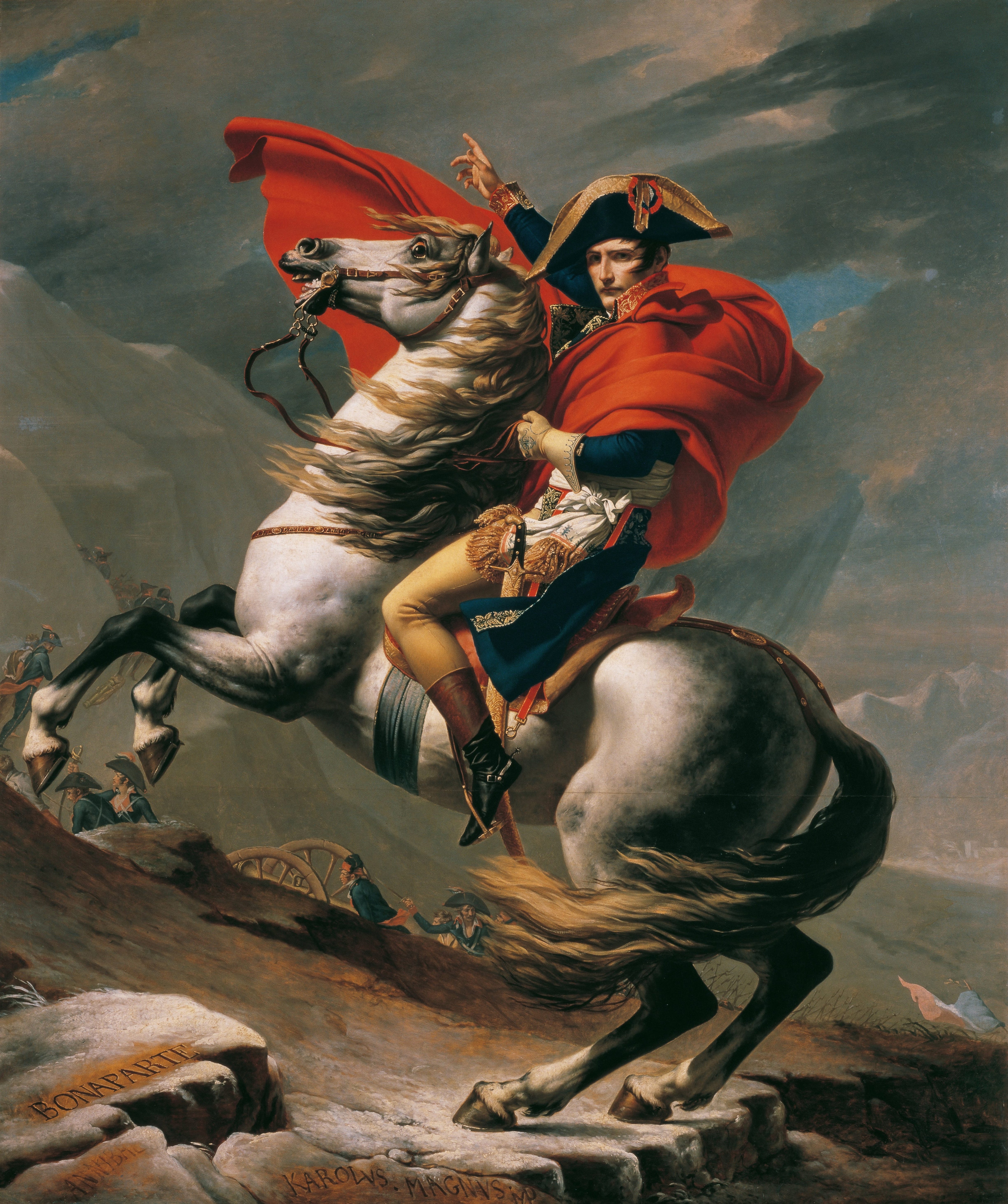
According to Kojève’s interpretation, Hegel argued that the gradual progress of world history had reached its apex in the Napoleonic era with the rationalization of bureaucracy following the outburst of freedom during the French Revolution. At different times, Kojève himself believed that the progress of world history had reached its zenith in Stalin’s Soviet Union, in the United States’ realization of socialism, and later in the emergence of the European Community. Kojève’s fanciful theories were later reappropriated, famously, by Francis Fukuyama when the Iron Curtain fell: as Rubio recounts, this was the idea that liberal democracy was the final horizon of human history and that, as Rubio stated, “every nation would now be a liberal democracy.”
Now, it is unclear—and immaterial—whether Hegel himself believed that he was situated at the “End of History,” or whether he believed that he himself, with his great philosophical mind, represented the final culmination of all philosophical thought. There have been raging debates over that for almost two centuries now. It would be wrong to suggest that the explicit rejection of the “End of History” hypothesis (as Rubio does) is itself Hegelian; or vice versa, that the belief in the end of history would be Hegelian.
Instead, what is Hegelian in Rubio’s speech is the world-historical vision of a progressing Western civilization that gradually reaches its apex after centuries of violent history, including conquest, colonization, and imperial expansion; that then encounters a dialectical setback or negation as a result ultimately of its expansion and victory over its opposites (“an evil empire,” “godless communist revolutions,” and “anti-colonial uprisings”); and that must undergo an overcoming of the delusion of the “End of History” to now reach a higher stage of civilization.
These are the deeply Hegelian elements of Rubio’s speech, and there are several dimensions:
First, Rubio proposes an (interrupted) progress narrative of civilizational improvement. The spirit of Western civilization, on Rubio’s account, has grown over millennia and flourished at mid-century at the height of European colonialism.
Rubio’s is a triumphalist history of conquest, settler-colonialism, and imperialism. “For five centuries before the end of the Second World War,” Rubio declares, “the West had been expanding. Its missionaries, its pilgrims, its soldiers, its explorers, pouring out from its shores to cross oceans, settle new continents, build vast empires extending out across the globe.”
This progressive vision of history is Hegelian. It reflects the Hegelian idea of an evolving spirit of nations. It is, as Cornel West describes Hegelian thought, “a synoptic vision, with a sense of the whole, that goes hand-in-hand with a synecdochic imagination and a synthetic analysis.”
Second, there is a dialectical element to Rubio’s historical account. There are setbacks and contradictions, and overcomings.
Rubio argues that the progressive rise of Western civilization peaked at mid-century and began to fall in the post-war period with the end of colonization and the contraction of the West. The decline was then accentuated by the delusion of the “End of History” at the close of the Cold War, and the belief in a liberal world order: “a foolish idea that ignored both human nature and it ignored the lessons of over 5,000 years of recorded human history,” Rubio maintains.
This setback reflects the dialectical process. Achieving Hegel’s “Absolute Spirit” means that there will be circular movement and setbacks. That is core to Hegel’s thought. After all, the quest to achieve self-consciousness passes through the “unhappy consciousness” in The Phenomenology of Spirit. There is a dialectical movement to history, replete with contradictions and conflict and overcoming.
Note that, along these lines, Rubio equates anti-colonialism with communism and characterizes it as evil. “The great Western empires had entered into terminal decline, accelerated by godless communist revolutions and by anti-colonial uprisings that would transform the world and drape the red hammer and sickle across vast swaths of the map in the years to come.” Hegel recognized in his Elements of a Philosophy of Right that colonial expansion was a necessary product of European economic growth and the saturation of European markets. On Rubio’s account, colonial independence is a reflection of European decline.
Third, Rubio recognizes that history is a slaughterbench, to borrow Hegel’s term. It consists of conquest, colonization, and crusades. It is made up of soldiers and explorers. It is a clash of civilizations. And in this, Rubio does not even acknowledge the horrors committed against Native Americans, enslaved persons, and non-white immigrants. Even as sanitized history, though, it is clearly one of violence and conquest.
Fourth, Rubio’s history is as selective and restricted as Hegel’s world history. Like Hegel, it effectively ignores Africa. Rubio mentions only the Pilgrims, the Spanish and French explorers, and Christians.
Rubio’s history of the United States is a story of white missionaries, pilgrims, explorers, and settlers, of Christopher Columbus who “brought Christianity to the Americas,” of the Scots-Irish who “gave us Davy Crockett, and Mark Twain, and Teddy Roosevelt, and Neil Armstrong,” of German farmers, of French fur traders, of American cowboys and Spaniards, and of Dutchmen who “named New Amsterdam before it was named New York.” There is no mention of the slave trade and the over 12 million Africans forcibly transported to the Americas. No mention of the 50 million or so indigenous peoples who lived in the Americas.
Hegelian Times
I should emphasize, and this is important, that it is the form of the historical argument, and not necessarily the exact content, that is Hegelian.
Seyla Benhabib questions whether these are Hegelian times because we are living through a period of rising repression and authoritarianism, and by contrast Hegel believed that world history was the full realization and instantiation of freedom.
But the point is not that Rubio diagnoses historical trends in the same way as Hegel did (although he certainly does interpret Western civilization as the realization of freedom, even if it has been interrupted by the delusion of the end of history), nor whether the United States is headed toward Hegelian absolute freedom or authoritarianism (surely the latter). The question is not whether Prussian bureaucracy was the actualization of freedom or a reactionary politics, nor whether Hegel’s politics were revolutionary (emphasizing The Phenomenology of Spirit) or more conservative (emphasizing the Elements of a Philosophy of Right).
The point–and the tragedy–is that, today, Rubio is portraying history in a Hegelian style as the evolution of spirit at a world historical level. In addition, insofar as there is such a thing as an American spirit, it sure feels as if there is a massive transformation of the American spirit today, and a broad dialectical reversal—it feels as if the American spirit is turning rightward. As a result, we need to think critically at the level of world-historic stages of social and cultural being—of ethical life.
The spirit of the times is taking an abrupt turn away from the discourse of neoliberalism toward a white nationalist, sovereigntist politics. I use these words carefully. I say from a “discourse of neoliberalism” to a “politics” of sovereign power because the supposed neoliberal consensus of earlier times masked a different reality—I have described it as a mounting counterrevolution following 9/11. So the reality of what preceded this current turn to sovereignty is complicated. It is not as simple as how Rubio describes it—as a “rules-based global order.” It was already sovereigntist but masked by a rhetoric of neoliberalism and operating through forms of economic imperialism, such as the Washington Consensus and the policies of the IMF and World Bank. But despite all that—and the caveats—there is a distinct shift now towards an explicit white nationalist, sovereigntist politics.
This is extremely dangerous because it is supremacist language. It is the rhetoric that led to the crusades, to imperial conquest, to colonization. It is the kind of supremacist language that led to Aryanism.
Inversions of Hegel
As we discussed in our seminar on Nietzsche and Hegelian history with Cornel West, Nietzsche wrote a searing critique of Hegel’s philosophy of history, arguing that it creates a mythic history that has pernicious consequences.
But as I tried to suggest, Nietzsche’s politics were confused and the genealogies that he proposed were equally problematic. In fact, there is a lot in Rubio’s historical fabulation that has a Nietzschean tinge. A lot of it resembles the “noble morality” that Nietzsche describes in On the Genealogy of Morals. It is almost as if Europeans are “the noble, powerful, high-stationed and high-minded,”[1] the “aristocratic soul,”[2] the noble races” and “the beast of prey, the splendid blond beast prowling about avidly in search of spoil and victory,”[3]
There is also a striking similarity between Rubio’s fears and Nietzsche’s. “For this is how things are,” Nietzsche emphasized: “the diminution and leveling of European man constitutes our greatest danger.”[4]
What this shows, again, as I demonstrate in another post, is that Nietzsche needs to be complemented and overcome by later philosophers of critical genealogy, such as Michel Foucault and Angela Davis, in order to push the historical-genealogical work in the direction of critical praxis. The bottom line is that Foucault’s critique of Nietzsche’s attack on Hegelian history is one path to invert the story that Rubio presents. (I tried to explain this at Hegel 2/13).
Another approach is to draw on Herbert Marcuse, who tried to recuperate Hegel from the fascists. He argued that Hegel’s thought was characterized by negativity—the negative power of the dialectic—and thus promoted the power of negative thought. That negativity, Marcuse argued, was essential to question the status quo, undermine the consolidation of authoritarian power, and avoid the slippage into positivism and fascism. As applied to Rubio’s speech, this would entail recuperating other aspects of Hegel’s thought—especially his writings on the dialectic.
In any event, we desperately need to engage these “inversions of Hegel” now, given that the far Right in power—as evidenced by Marco Rubio’s speech at the MSC—is speaking in such a Hegelian idiom. This may mean recuperating Hegel from the Right. It may also mean inverting Hegel once again. What is sure is that we can draw from the well of brilliant critical thinkers who turned Hegel upside down, back on his feet.
So let’s continue reading together, next week with Gayatri Chakravorty Spivak.
A “Work of Art of Western Civilization”
Marco Rubio’s speech is what I would call, ironically, a “work of art of Western Civilization.” It is a “work of art” in the European Enlightenment tradition, that ignores the genocide of native peoples, the enslavement of African peoples, the exploitation of Asian peoples, to paint a picture that speaks only, in Rubio’s words, of “the genius of Mozart and Beethoven, of Dante and Shakespeare, of Michelangelo and da Vinci, of the Beatles and the Rolling Stones.” It is a “sublime” work of art, in the Burkean sense—one that instills terror, awe, and danger.
Now, none of it is new, and we have seen it coming. We recognize the philosophical antecedents and the contemporary far Right thinkers who are shaping Rubio’s imagination. Rubio is not original—nor is he writing his own speeches. And of course, the speech is targeted to a European audience in a European forum—in Munich—and is intended to do strategic work. Its purpose is to push European countries to spend more on military defense and close their borders. The audience matters. This is a strategic intervention, not a philosophical text.
But it remains staggering that the Secretary of State of the United States could spin a history of America that does not even mention indigenous peoples or the legacy of slavery. It is not surprising given the Trump administration, but it should remain shocking. It cannot be normalized.
And it reflects, I argue, the sign of a new world-historical spirit that is taking the stage and transforming our public sphere, our culture, our politics. It is nourished by banning books, prohibiting intellectual thought (critical race theory, African American history, queer theory), and closing fields of study (race studies, ethnic studies, centers on gender and sexuality, Middle Eastern studies, etc.). It represents a dire threat to the wellbeing of this country and the planet—and especially the wellbeing of our immigrant neighbors and friends and everyone who has been excluded and erased from this fabulated history of Western civilization.
Notes
[1] Nietzsche, On the Genealogy of Morals, First Essay, Section 2.
[2] Id., Section 3.
[3] Id., Section 11.
[4] Id., Section 12 (paradoxically, it is Christianity for Nietzsche that is making the European mediocre).
I don’t think it’s Hegelian as much as warmed over Franco-ism.
“…To which we have fallen heir”: the over half million Americans who died in the world wars would like a word.
Thank you for your analysis.